
 Hassan Naqvi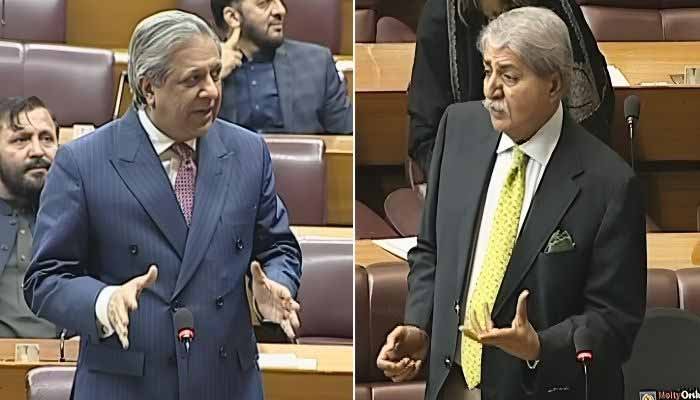
Islamabad, January 12, 2026 — The federal government on Monday withdrew the Special Economic Zones (Amendment) Ordinance, 2026 after the Pakistan Peoples Party (PPP) staged a walkout from the National Assembly, raising serious constitutional objections over the manner in which the ordinance was promulgated.
According to an official statement issued by the Prime Minister’s Office (PMO), the government advised the President to withdraw the ordinance under Article 89(2)(b) of the Constitution. The summary stated that the withdrawal was being carried out as proposed in paragraph four of the cabinet advice forwarded to the presidency.
The move came hours after PPP lawmakers walked out of the National Assembly session, with senior party leader Naveed Qamar declaring the ordinance unconstitutional and without precedent.
PPP questions legality of ordinance
Speaking on the floor of the House prior to the walkout, Naveed Qamar said that an ordinance had, for the first time in Pakistan’s legislative history, been enforced without the approval or signature of the President.
He described the development as “shameful” and claimed that no such action had occurred even during periods of military rule. Questioning the government’s justification, Qamar said the promulgation of an ordinance without presidential assent was legally untenable.
Under these circumstances, he announced, the PPP could not continue to participate in the proceedings of the National Assembly and would register its protest through a walkout.
Bilawal summons party meeting
Following the walkout, PPP Chairman Bilawal Bhutto-Zardari convened a high-level party meeting to deliberate on the ordinance and its constitutional implications, sources confirmed. The meeting was called to assess the party’s legal and parliamentary response to the situation.
Government responds on floor of House
Responding to the controversy, Federal Minister for Law and Justice Azam Nazeer Tarar informed the National Assembly that multiple bills and ordinances were currently pending presidential assent.
He stated that the government had been informed only a day earlier that the President had granted assent to several pending legislative measures, adding that the Special Economic Zones ordinance may have been linked to that process.
Clarifying the government’s position, Tarar referred to Article 75 of the Constitution, which provides that bills passed in a joint sitting of Parliament are deemed to have received presidential assent after ten days if no decision is communicated. He stressed, however, that the government had refrained from notifying even those bills out of respect for the presidency.
The law minister further disclosed that several bills, including legislation related to universities, remained pending with the President and had neither been notified nor enforced. He assured the House that he would engage with relevant stakeholders and revert to Naveed Qamar after seeking further clarification.
PPP maintains constitutional concerns
PPP MNA Agha Rafiullah later told reporters that the party had serious reservations about both the substance of the ordinance and the procedure adopted for its promulgation. He remarked that such actions had not been witnessed even under the martial law regimes of Ayub Khan, Zia-ul-Haq, or Pervez Musharraf.
Rafiullah alleged that the government was attempting to carry out an unconstitutional act, adding that it was imperative to raise objections when parliamentary norms were violated.
Former prime minister and senior PPP leader Raja Pervez Ashraf also underscored the constitutional requirement of presidential assent, stating that an ordinance, by definition, could not come into force without the President’s signature.
In an exclusive conversation, Ashraf said he was unaware of how the lapse occurred but emphasised that any ordinance lacking presidential approval was unconstitutional and legally invalid. He called for an immediate rectification of the process and said the party would review the explanation offered by the law minister before determining its next course of action.
Process initiated for opposition leader appointment
Separately, National Assembly Speaker Ayaz Sadiq initiated the formal process for the appointment of the Leader of the Opposition in the lower house, setting Thursday as the deadline for issuance of the official notification.
PTI Chief Whip Amir Dogar confirmed that 75 members had signed a submission nominating Mahmood Khan Achakzai for the post. The speaker subsequently held consultations with lawmakers from PTI and PPP and briefed them on the procedural requirements.
PTI Chairman Barrister Gohar Ali Khan said the speaker had assured party members that the notification would be issued by Thursday, while senior PTI leader Asad Qaiser confirmed that PPP lawmakers were present during the consultations.
The development follows the removal of Omar Ayub and Shibli Faraz from their respective opposition leadership positions in the National Assembly and Senate after their convictions in cases linked to the May 9 violence.

 Web Desk


 Web Desk


