
 Web Desk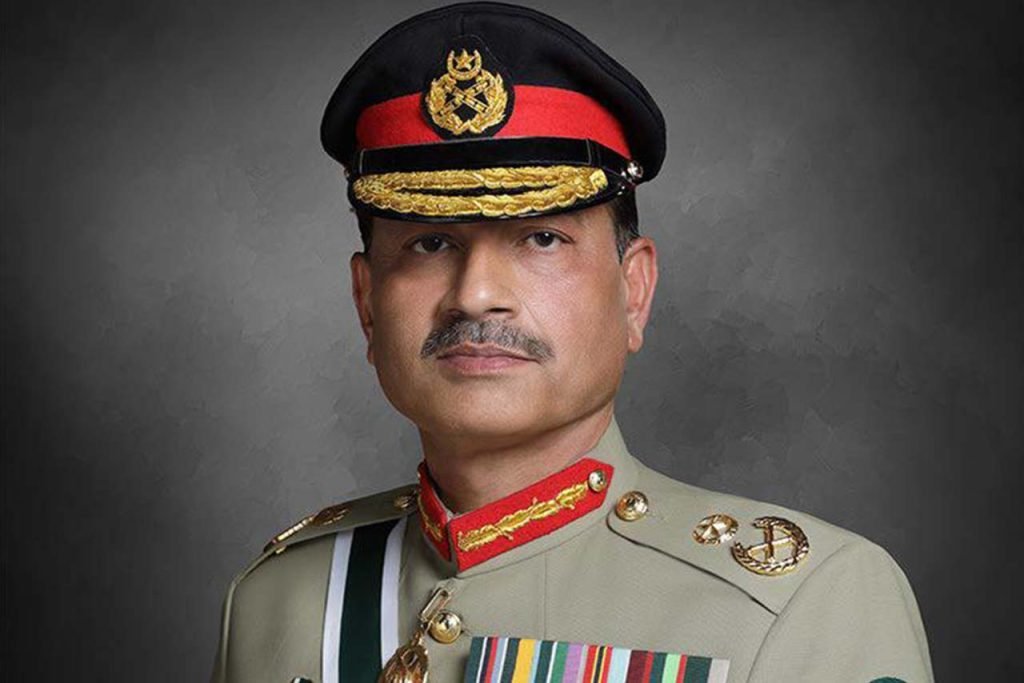
ISLAMABAD — Recent amendments to Pakistan’s defence laws have significantly expanded the powers of Chief of Defence Forces and Chief of Army Staff Field Marshal Asim Munir, placing him at the centre of the country’s military command structure, according to constitutional experts.
Under the amended Defence Forces Act, the Chief of Defence Forces (CDF) has been given powers extending beyond the Army to personnel of the Pakistan Navy and Air Force, including authority related to retirement, resignation, dismissal, retention in service and, in certain circumstances, extensions or reductions in service tenure.
Constitutional experts say the changes mean the CDF’s authority is no longer confined to operational command but now extends into the career management of officers across all three services.
The reforms follow the 27th Constitutional Amendment, approved in November 2025, which abolished the post of Chairman Joint Chiefs of Staff Committee and created the new position of Chief of Defence Forces.
The government has presented the new command structure as a mechanism to integrate the Army, Navy and Air Force more effectively in response to the changing nature of warfare. The stated objective is to coordinate multi-domain operations and bring the capabilities of all three services under a more integrated defence strategy.
For this purpose, a Defence Forces Headquarters has been established to function as the central headquarters of the armed forces under the CDF.
CDF Becomes Principal Military Adviser to PM
Under the amended framework, the Chief of Defence Forces has been designated the Prime Minister’s principal military adviser.
This makes the CDF the central military office responsible for providing high-level advice to the prime minister on national security, defence and matters relating to the armed forces.
The CDF has also been assigned operational command and control of the three services, marking a significant departure from the previous system in which the Army, Navy and Air Force chiefs exercised command over their respective services while the Chairman Joint Chiefs of Staff Committee primarily performed a coordination and advisory role.
The new law also gives the CDF broad responsibilities for “multi-domain integration, coordination and oversight,” effectively placing joint military planning and operational coordination at the centre of the new command structure.
Powers Over Military Careers
One of the most significant changes concerns the CDF’s authority over military personnel.
Under the amended law, the CDF can exercise powers under the relevant service laws concerning the retirement, dismissal, resignation, retention and, in certain cases, extension of service of personnel belonging to the armed forces.
Certain appointments made under Article 243 of the Constitution remain outside these powers.
Constitutional experts point out that decisions concerning the promotion, retirement and retention of senior officers are among the most important sources of institutional influence within any military hierarchy.
With Field Marshal Asim Munir simultaneously serving as Chief of Army Staff and Chief of Defence Forces, these powers extend his institutional influence beyond the Pakistan Army and into the broader joint defence structure.
Additional Powers Can Be Assigned
The amended legal framework also allows the federal government to assign additional responsibilities to the Chief of Defence Forces.
The government and the CDF have also been empowered to formulate rules and directions necessary for implementing the new system.
However, constitutional experts caution that this provision does not amount to a blanket transfer of the prime minister’s powers to the CDF. Any additional authority would remain subject to the federal government’s legal and constitutional framework.
Changes to Strategic Command
Another major element of the restructuring concerns Pakistan’s National Command Authority and strategic command structure.
Following the abolition of the Chairman Joint Chiefs of Staff Committee under the 27th Constitutional Amendment, a new position of head of the National Strategic Command was created. General Syed Amer Raza was appointed as its first commander on the recommendation of the Chief of Army Staff and Chief of Defence Forces.
The National Strategic Command has a key role in the operational integration of Pakistan’s strategic forces.
However, a major constitutional limitation remains: the National Command Authority, headed by the prime minister, retains the final authority over nuclear policy and the use of nuclear weapons.
Therefore, the new legislation should not be interpreted as transferring direct authority over the use of nuclear weapons to Field Marshal Asim Munir. Nevertheless, the CDF’s central role in the operational structure of the strategic forces further enhances his overall position within Pakistan’s military command system.
A More Centralised Military Command
The latest legislation completes a military command restructuring that began with the 27th Constitutional Amendment.
While the government maintains that the objective is to create a more integrated and effective command system for modern warfare rather than concentrate power in one individual, the institutional implications are significant.
Field Marshal Asim Munir currently holds both the positions of Chief of Army Staff and Chief of Defence Forces. As a result, direct command of the Army, joint operational command of the three services, the role of principal military adviser to the prime minister, oversight of joint and strategic affairs, and significant powers relating to military personnel are now concentrated around the same officeholder.
His position is consequently strengthened in three key respects: he commands the Pakistan Army directly while also exercising joint operational authority across the three services; he serves as the prime minister’s principal military adviser on defence and national security matters; and he possesses expanded authority over service, retirement and retention matters involving military personnel.
Taken together, these powers make the office of Chief of Defence Forces considerably more powerful and operationally active than the former position of Chairman Joint Chiefs of Staff Committee.
The key question now is how this highly centralised command structure will evolve in practice and how the new distribution of military authority will affect Pakistan’s civil-military institutional balance.

 TS Exclusive
 Hassan Naqvi

 Web Desk


