
 TS Exclusive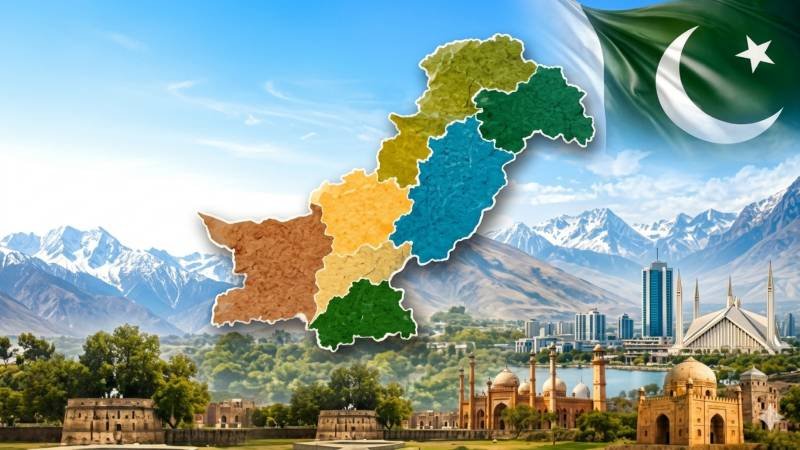
ISLAMABAD: The debate over creating new provinces in Pakistan is once again gaining attention, but a more fundamental question remains largely unanswered: would increasing the number of provinces actually solve the country’s administrative problems, or would empowering local governments provide a more effective solution?
For decades, citizens in remote districts have often been required to travel to provincial capitals such as Lahore, Karachi, Peshawar and Quetta to address matters that could potentially be resolved much closer to home.
This raises a critical question for policymakers: should Pakistan continue looking at the creation of new provinces as an administrative remedy, or should it first focus on transferring meaningful political, administrative and financial powers to the local level?
International experience suggests that administrative efficiency is not determined simply by the number of provinces, states or administrative units. Strong institutions, effective local governments, decentralisation, rule of law and reliable public services are equally, if not more, important.
The demand for new provinces is not new. Since Pakistan’s creation, debates over administrative restructuring have emerged in different forms. The country experienced the One Unit system, witnessed its eventual dissolution and subsequently saw repeated proposals for dividing Punjab and creating new provinces in Sindh and elsewhere.
The issue has periodically returned to the political mainstream, with supporters arguing that smaller administrative units could improve governance and bring government closer to the people.
However, any decision of such magnitude requires more than simply citing examples from other countries. Pakistan has its own geographical, economic, linguistic, cultural and political realities, all of which must be considered before embarking on a major territorial reorganisation.
India is frequently cited by proponents of new provinces as evidence that administrative units can successfully be reorganised. Several Indian states have been created or reorganised over the years, including Haryana following the division of Punjab, Uttarakhand and Telangana.
But India’s experience also demonstrates that population alone has not determined the creation of states. Language, cultural identity, political movements and administrative considerations have all played significant roles.
If population size alone were the determining factor, some of India’s largest states would necessarily have been divided. Yet heavily populated states such as Uttar Pradesh and West Bengal continue to exist as single states.
For Pakistan, therefore, India’s experience cannot simply be replicated without examining the political and administrative circumstances that led to each reorganisation.
Similarly, comparisons with countries such as Turkey and Germany can provide useful context but do not offer a simple formula for development.
Turkey, with a population of more than 85 million, has 81 provinces, while Germany consists of 16 federal states. German states enjoy substantial powers in areas including education, health and regional development.
Yet neither country’s economic performance can reasonably be attributed simply to the number of administrative units. Institutional strength, governance, economic policy, public-service delivery and the rule of law are among the broader factors that determine administrative and economic performance.
The most difficult question surrounding Pakistan’s proposed new provinces is therefore not whether they can be created, but how they would actually be created and administered.
If Punjab or Sindh were divided, where exactly would the boundaries be drawn? What would the new provinces be called? How would competing regional identities be accommodated? How would water resources be distributed? How would existing debt and financial liabilities be divided? What would happen to provincial revenues, government employees, assets, departments and institutions?
Unless these questions are addressed through a detailed administrative and financial framework, the slogan of creating new provinces cannot by itself constitute a comprehensive reform agenda.
The underlying problem becomes even clearer when viewed from the perspective of ordinary citizens.
A resident of Taunsa may have to travel to Lahore, someone in Ghotki may need to go to Karachi, a resident of Loralai may travel to Quetta, while someone from Swat may have to reach Peshawar for an administrative or public-service matter.
The question should therefore be whether the provincial capital needs to be brought closer—or whether government services need to be brought closer to the citizen.
Can basic education, healthcare and administrative services be delivered effectively at the tehsil level? Can districts and cities have institutions with sufficient authority and financial resources to resolve local problems?
If the answer is yes, then creating a new province may not necessarily be the only, or even the most immediate, solution.
A strong and empowered local-government system could potentially address many of these problems without redrawing Pakistan’s provincial map.
Under an effective decentralised model, citizens should be able to resolve routine civic and administrative issues through institutions operating at the neighbourhood, union council, tehsil, municipal and district levels.
The objective would not be to create another layer of political offices, but to establish genuinely empowered institutions close enough to understand and respond to local needs.
This is particularly important for Pakistan’s major cities, which face enormous pressure from population growth, traffic congestion, healthcare demands, education requirements, housing shortages, water supply, sanitation and employment.
If elected local governments possessed meaningful administrative and financial authority, a substantial portion of these responsibilities could be handled at the municipal level.
Such a system could reduce pressure on provincial governments while allowing citizens to deal with officials much closer to their communities.
It could also fundamentally change the importance of mayoral elections in cities such as Karachi and Lahore. If mayors controlled meaningful resources and possessed real authority over urban services, local elections could become considerably more consequential for citizens than they are under weak or limited municipal structures.
That does not mean the demand for new provinces should be dismissed altogether.
There may be circumstances in which an existing administrative unit becomes so large or difficult to govern that restructuring becomes a genuine administrative necessity. But such a decision should be based on comprehensive research, public consultation, financial planning, institutional design and broad political consensus.
Simply arguing that people have to travel long distances to reach a provincial capital cannot, by itself, be sufficient justification for creating a new province.
The ultimate objective should be straightforward: the state should reach the citizen, rather than forcing the citizen to travel to the state.
If local governments are empowered, financially viable and held accountable, many administrative functions can be performed closer to the people. This could improve service delivery while reducing the burden on provincial capitals and centralised bureaucracies.
Pakistan therefore needs to approach the debate over new provinces with a broader perspective.
The real question is not merely whether the country needs more provinces. It is whether Pakistan needs more provinces—or stronger local governments capable of bringing the state to the doorstep of its citizens.
Until that question is answered through serious research and national consensus, the demand for new provinces will continue to raise another fundamental question: will creating new provinces actually improve governance, or are the country’s administrative problems rooted much deeper in the weakness of local institutions?

 Hassan Naqvi

 Web Desk
 Web Desk


