
 Hassan Naqvi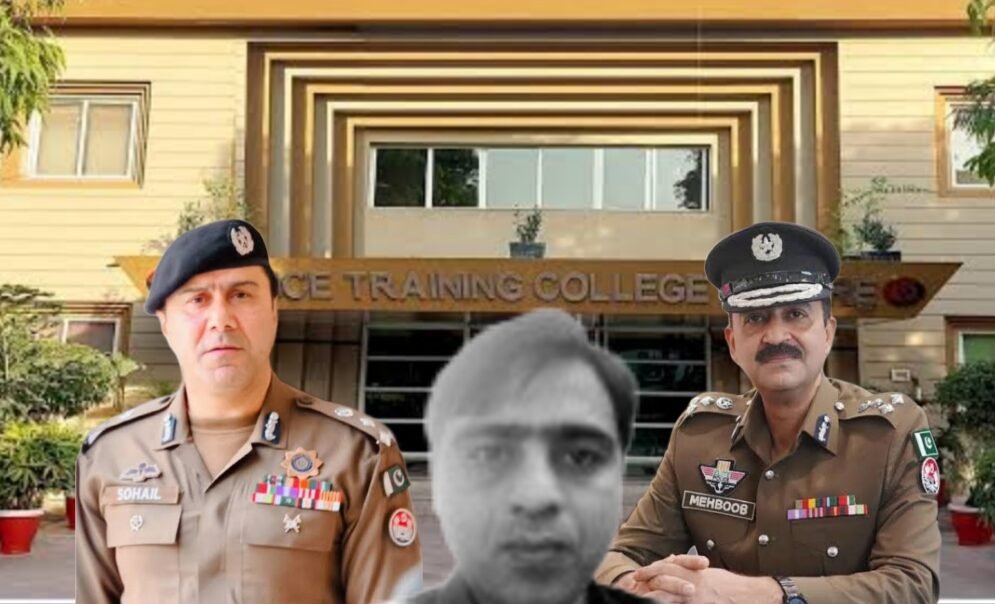
Sources tell The Scoop an unusual dispute between senior officers preceded a financial probe; inquiry alleges massive irregularities, while questions remain over the audit trail, competing figures and responsibility for the money
LAHORE: Five goats.
Yes, just five goats.
Sources familiar with developments at Police Training College Chuhng have told The Scoop that an apparently trivial dispute over goats grazing inside the training college became part of a much larger confrontation between senior police officers — one that would later coincide with a controversial financial inquiry resulting in the removal of DIG Mehboob Aslam Lillah from his command.
But the goats are only the beginning of the story.
At its heart is an inquiry involving alleged financial irregularities of approximately Rs226 million, allegations of bogus billing and questionable documentation, multiple vendors, large sums received for training personnel of other government organisations and a chain of decisions that ultimately placed a senior police officer under serious scrutiny.
The question now is not simply whether irregularities occurred.
The bigger questions are:
Who authorised them?
Who benefited?
Where did the money go?
Why did the audit begin when it did?
And, perhaps most importantly:
Was the investigation entirely about financial accountability, or did an internal power struggle become intertwined with it?
The Scoop has spoken to sources familiar with the matter and reviewed the publicly available record surrounding the case. The allegations against individuals remain subject to due process and have not been established as criminal convictions.
The officer at the centre of the storm
Mehboob Aslam Lillah’s career predates the current controversy by more than two decades.
He rose through the police hierarchy from ASP to SP, SSP and eventually DIG, serving in different assignments.
His earlier career included a significant stint with the National Highways & Motorway Police, where he served as Commandant of its training college.
Publicly available material records his involvement in training and institutional development during that period. He was associated with initiatives involving infrastructure and facilities for trainees and was publicly identified as commandant of the NH&MP Training College.
That background is important because Lillah subsequently received another training-college assignment in Punjab.
Sources told The Scoop that former Punjab IG Dr Usman Anwar wanted the Chuhng institution transformed along similar lines.
Lillah accepted the challenge.
And, according to people familiar with the institution, the physical transformation of the college became one of his major priorities.
Lawns were improved.
Plants and flowers were added.
The premises were maintained and beautified.
The emphasis was not merely on training but on the overall environment in which police recruits and officers were being trained.
Then came the goats.
The five-goat dispute
According to sources familiar with the episode, a junior DIG, identified as Faisal Ali Raja, was residing in an official residence associated with the college premises.
Sources said Raja kept high-breed goats and that the residence had two entrances — one opening towards the main road and another giving access towards the college side.
The allegation is that the second gate was routinely left open and the goats entered the training-college grounds.
According to sources, the animals grazed on lawns and damaged plants and other landscaping.
During one inspection, Lillah allegedly noticed damaged vegetation and questioned subordinate staff.
The answer, according to sources, was blunt:
The goats were eating it.
Sources told The Scoop that Lillah initially sent a friendly message asking Raja to keep the animals inside the residence or arrange for them to be taken elsewhere for grazing.
The request allegedly did not resolve the issue.
A second message reportedly followed.
Again, the goats allegedly continued appearing inside the college grounds.
Sources said Lillah eventually ordered that the gate connecting the residence with the college premises be closed.
The move allegedly triggered a confrontation.
According to the account provided to The Scoop, the gate was reopened after Raja objected.
Lillah was then allegedly informed.
Sources said the gate was closed again and the DIG reportedly warned that departmental action could follow if the goats continued entering the college.
That, according to sources, was when the matter allegedly moved beyond a dispute over landscaping.
Did the goats become a bigger issue?
Sources told The Scoop that Raja subsequently approached the then Inspector General of Police, Dr Usman Anwar, complaining about the closure of the gate.
According to the account provided to this newspaper, the IG contacted Lillah and sought an explanation.
Sources said that once the actual dispute became clear, the immediate confrontation subsided.
But the two officers remained part of the same institutional ecosystem.
Then the postings changed.
Dr Usman Anwar eventually left the IG’s office.
A new police leadership structure emerged.
And Lillah was subsequently transferred from the Chuhng command.
Capt. (retd.) Muhammad Sohail Chaudhry took charge as the new commandant.
That change would prove crucial.
March 17: The audit begins
The first major documented step in the financial controversy came on March 17, 2026.
The newly appointed commandant sought an internal audit and inspection of the college accounts, citing the need for transparency and proper financial management.
An audit team was subsequently constituted under the supervision of DIG Faisal Ali Raja.
The timing is significant because Raja is the same officer whom sources identify as having been involved in the earlier dispute over the goats.
That fact, by itself, proves nothing.
But it is certainly a fact worth examining.
The audit team reportedly sought financial records, questioned officials and scrutinised transactions.
Large transactions soon attracted attention.
One reported issue involved a withdrawal exceeding Rs67 million shortly before the new commandant assumed charge.
Another transaction exceeding Rs86 million was also questioned.
Questions were additionally raised concerning funds received from organisations whose personnel were undergoing training at the college and about vendor arrangements.
The internal audit therefore moved rapidly from an accounting exercise into a much larger institutional controversy.
The numbers kept changing
This is one of the most intriguing aspects of the case.
Initial reports emerging from the internal audit referred to alleged irregularities running into hundreds of millions of rupees, with figures reported in the vicinity of Rs400 million or more.
Later, the government inquiry reportedly placed the alleged financial irregularities at approximately Rs226 million.
That difference requires an explanation.
Was the initial figure based on the total amount of transactions questioned by auditors?
Did it include expenditures that were subsequently excluded?
Did the inquiry narrow the period under examination?
Were some objections resolved?
Or did the later inquiry arrive at a different assessment of what constituted an actual financial loss?
These are not technical questions.
They could fundamentally alter the understanding of the case.
If the government has a final figure of Rs226 million, the complete audit trail should explain precisely how that figure was calculated.
What the inquiry alleges
The government inquiry subsequently painted a serious picture.
It alleged irregularities involving several financial heads, including funds connected to training of personnel from other government bodies, food and canteen-related expenditure, stationery, furniture and machinery, transport and other institutional expenses.
Among the most significant allegations was the handling of funds associated with personnel being trained at the college.
The inquiry reportedly concluded that Lillah, as commandant, was the sanctioning authority during the relevant period.
But being the sanctioning authority is not necessarily the same thing as personally receiving or misappropriating funds.
That distinction must be established through evidence.
If an expenditure was fraudulent, investigators need to determine:
Who prepared the bill?
Who verified it?
Who certified delivery?
Who approved it?
Who issued the payment?
Who received the money?
Where did it ultimately go?
That is the difference between an administrative lapse and a criminal case.
The contractor and the alleged company network
One of the most serious allegations emerging from the inquiry concerns contractor Yasir Ayub.
The inquiry reportedly alleged that Ayub was involved in the financial irregularities and that bills were processed through several companies.
Reports have referred to a network of approximately five or six companies.
If that allegation is correct, it may represent the most important lead in the entire case.
Because a government procurement system cannot be properly investigated merely by looking at the commandant’s signatures.
Investigators should establish:
- The ownership of every company.
- Their directors and shareholders.
- Their dates of incorporation.
- Their registered addresses.
- Their tax records.
- Their bank accounts.
- Their employees.
- Their previous government contracts.
- The contracts awarded by PTC Chuhng.
- The quotations submitted by competing vendors.
- The officials who recommended each purchase.
- The officials who verified delivery.
- The ultimate beneficiaries of payments.
If the companies were genuinely independent vendors, the records should establish that.
If they were connected, the procurement process deserves much deeper scrutiny.
And if money moved from those companies to individuals linked to the procurement process, the case becomes substantially more serious.
The Rs169 million question
A major component of the allegations relates to funds associated with the training of personnel from other departments and organisations.
Sources and reports concerning the inquiry have put this component at roughly Rs169 million under various training-related heads, including PERA and Customs-related funds.
This raises a basic question:
Were the trainees actually trained and were the promised services actually provided?
If hundreds of officials genuinely underwent months-long training at Chuhng and received food, accommodation, instruction, transport and other facilities, then investigators must determine whether the expenditure represented the actual cost of providing those services.
Conversely, if money was billed for services that were never provided, the alleged financial loss must be established through attendance records, procurement files, stock registers, food records and payment documentation.
The existence of a training programme alone neither proves innocence nor proves corruption.
The money trail does.
The food and canteen trail
Another substantial component involves food and canteen-related receipts and expenditure.
This is an area where the investigation should be particularly forensic.
A training college housing hundreds of trainees naturally generates substantial food expenditure.
But that also creates a paper trail.
Daily attendance.
Meal counts.
Food procurement.
Kitchen consumption.
Vendor invoices.
Stock registers.
Canteen receipts.
Bank deposits.
Food contracts.
If these records are reconciled, investigators should be able to establish whether the reported expenditure corresponds with the actual number of trainees and meals provided.
That exercise could either strengthen the corruption case or expose weaknesses in the inquiry.
What was Lillah’s actual responsibility?
This is perhaps the central legal and administrative question.
If the inquiry establishes that the commandant personally ordered fraudulent payments, benefited from them or knowingly facilitated them, the allegations become extremely serious.
But if the evidence shows that financial officers, accountants, procurement officials or contractors prepared fraudulent documentation without the commandant’s knowledge, the responsibility may lie elsewhere.
A commandant is responsible for the institution.
But institutional responsibility and personal criminal liability are different questions.
The investigation therefore needs to establish the chain of knowledge.
The three-year audit gap
Another issue emerging from the controversy is the question of auditing.
Sources familiar with the matter say Lillah maintained records of institutional expenditure but that the college’s accounts had not been subjected to the required audit for a prolonged period.
If that is correct, it represents a serious governance failure.
But again, the question is:
Who was responsible for ensuring the audit took place?
Was the commandant solely responsible?
Was there a designated accounts officer?
Were reminders issued?
Did the central police finance branch receive the accounts?
Did auditors refuse or fail to conduct the audit?
Were previous commandants audited?
And why did the alleged irregularities surface only after the change of command?
These questions should be answered through documents rather than competing narratives.
The Faisal Raja factor
The most sensitive element of this investigation is the role of DIG Faisal Ali Raja.
According to the documented timeline, an audit team operating under Raja’s supervision examined the Chuhng accounts after the new commandant requested scrutiny.
Sources, meanwhile, have told The Scoop about an earlier personal dispute between Raja and Lillah involving the college residence and the goats.
Again, this does not establish retaliation.
But it creates an obvious conflict-of-interest question that authorities should address transparently.
Was Raja involved in preparing or supervising the audit?
If so, was the earlier dispute disclosed to the authorities?
Was any independent officer available to conduct the financial examination?
Were Lillah’s responses incorporated into the audit?
Was he given an opportunity to challenge individual audit objections?
And did an independent authority subsequently verify the findings?
These are legitimate accountability questions.
The inquiry did not target only one person
Another point often lost in the social-media debate is that the inquiry did not reportedly place responsibility exclusively on Lillah.
Multiple officials and a contractor were named in connection with different alleged irregularities.
Recommendations reportedly included criminal proceedings against the contractor and accountant, while departmental proceedings were recommended against several police officials.
That matters.
If the scandal involved a system of allegedly bogus bills and fabricated records, the entire chain should be investigated.
A system involving multiple signatures, accounts personnel, procurement officials, vendors and approving authorities cannot logically be reduced to one individual without establishing the evidence against each participant.
From commandant to OSD
The controversy ultimately had a dramatic consequence for Lillah.
The senior officer was removed from his command and made an Officer on Special Duty after the inquiry process.
The matter was also reportedly referred for further proceedings, including potential criminal action.
But OSD status is an administrative posting.
It is not a conviction.
Nor does being placed on OSD establish guilt.
The final determination must come through the relevant departmental and criminal processes.
So, did five goats really bring down a DIG?
That is the headline question.
The honest answer, at this stage, is:
There is no evidence establishing that five goats caused Lillah’s removal.
There is, however, a reported sequence involving:
A dispute over goats.
A change of command.
An internal audit.
Questions over major financial transactions.
A government inquiry.
Allegations exceeding Rs200 million.
A contractor allegedly linked to multiple companies.
Several officials facing recommendations for action.
And a senior DIG ending up on OSD.
The coincidence is striking.
But journalism cannot turn coincidence into causation.
That is why The Scoop is putting the questions on record.
Punjab Police now owes the public answers
The government can end much of the speculation simply by making the relevant findings available.
1. What was the original amount identified by the internal audit?
2. Why did early figures approach Rs400–450 million while the later inquiry settled around Rs226 million?
3. What exact period was examined?
4. What did the proposed external audit find?
5. Who owned the companies allegedly used by the contractor?
6. How much money did each company receive?
7. Were all procurement procedures followed?
8. Were the goods and services actually delivered?
9. Where did the disputed funds ultimately go?
10. Did investigators trace the money beyond the vendors?
11. What was the exact role of each official named in the inquiry?
12. Was DIG Faisal Ali Raja’s role in the audit reviewed for any potential conflict of interest?
13. Was the alleged dispute over the goats documented anywhere officially?
14. Was Mehboob Aslam Lillah given a full opportunity to respond to every financial allegation?
15. Has the matter now been converted into a formal criminal case, and if so, what are the precise charges?
The Scoop’s conclusion
There are two extremes that should be avoided.
One is to declare:
“Rs226 million stolen and Mehboob Aslam Lillah is guilty.”
The other is to declare:
“The entire case was fabricated because of five goats.”
Neither has been conclusively established.
The truth lies in the documents.
If Rs226 million was unlawfully misappropriated, the money trail should expose the beneficiaries.
If the alleged bills were bogus, the procurement records should establish who prepared and approved them.
If the companies were fronts, their ownership records should reveal the connections.
If Lillah personally benefited, banking and financial evidence should establish it.
And if the inquiry was influenced by personal rivalry, the documentary record, chronology and testimony should eventually reveal that as well.
Until then, one thing is certain:
The Chuhng scandal is no longer simply a story about an audit.
It is a test of whether Punjab Police can investigate its own house with the same determination with which it investigates everyone else’s.
And The Scoop will keep asking the question that matters most:

 TS Exclusive

 Web Desk
 Web Desk


