
 TS Exclusive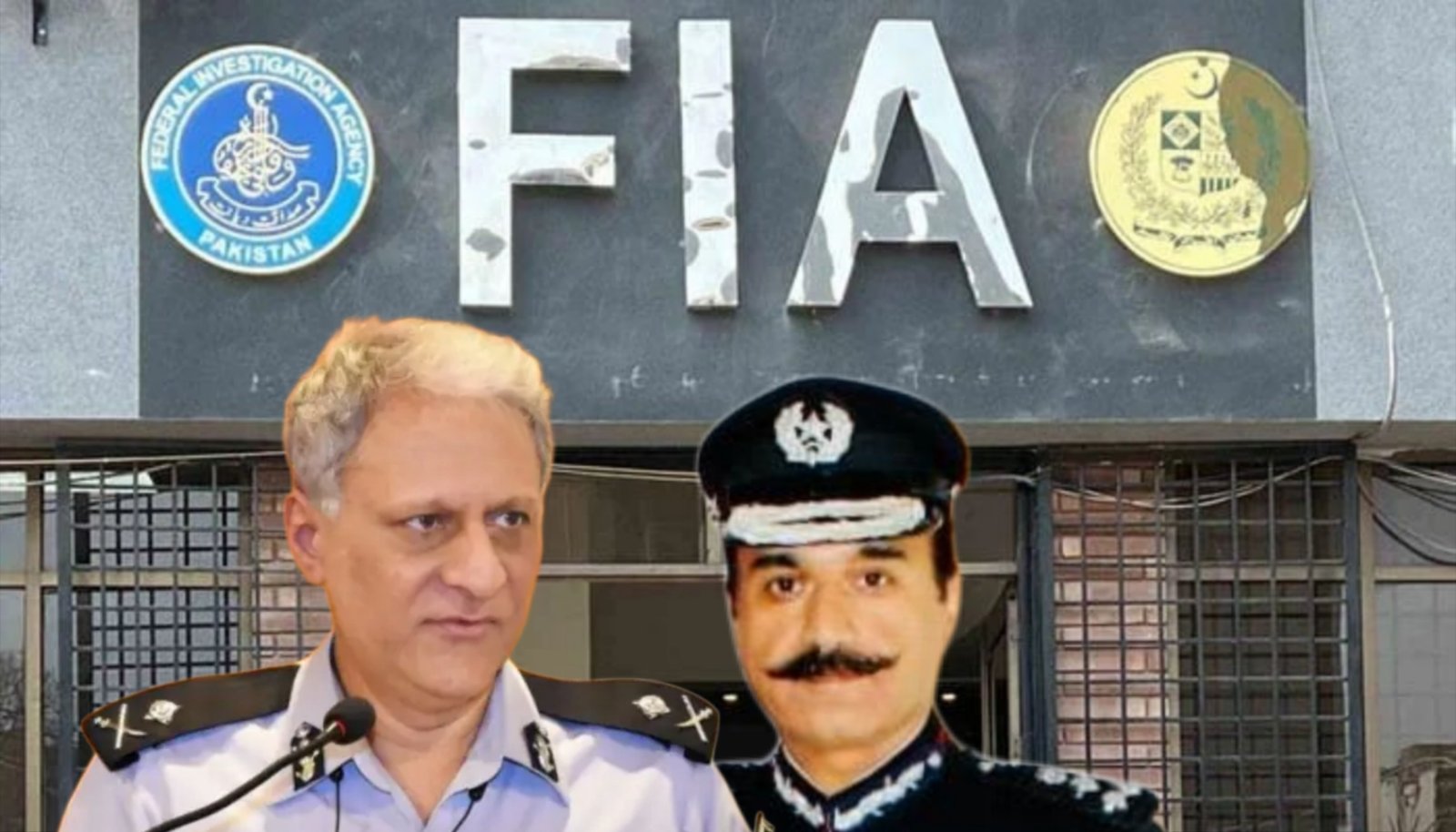
SLAMABAD: The Federal Investigation Agency (FIA) is undergoing a significant institutional transformation under Director General Dr Usman Anwar, with the agency increasingly shifting from conventional investigation methods towards a model built around intelligence fusion, real-time command, specialised units, digital forensics and stronger international coordination.
Since Dr Anwar assumed charge in February 2026, the FIA has introduced or accelerated a series of structural and operational initiatives aimed at responding to a rapidly changing crime landscape — from human trafficking and migrant smuggling to terrorism financing, cryptocurrency-related crime, cyber-enabled fraud and dark-web activity.
At the centre of this transformation is the newly operational National Command and Control Centre (NC3) at FIA headquarters.
But officials and law-enforcement observers say the significance of the reforms lies less in the creation of individual units and more in the attempt to connect intelligence, investigation and operational decision-making through a centralised architecture.
A senior FIA official told The Scoop that the agency’s approach was increasingly being built around the principle that modern organised crime could not be effectively tackled through isolated investigations.
“The nature of crime has changed, and our investigative response has to evolve accordingly,” the official told The Scoop.
NC3 becomes the nerve centre
The establishment of NC3 represents perhaps the most visible component of the FIA’s restructuring.
The centre brings together a range of operational and intelligence capabilities, including immigration monitoring, integrated border management, human-trafficking and migrant-smuggling intelligence, risk analysis, anti-money-laundering investigations, cryptocurrency investigations and international coordination.
According to FIA officials, its Case Management System allows real-time monitoring of investigations and performance across FIA formations nationwide, while a centralised daily situation report and operational support desk provide senior command with a nationwide operational picture.
The model is designed to address a longstanding challenge faced by large law-enforcement organisations: information generated in one part of the country can remain disconnected from investigations elsewhere.
NC3 is intended to provide a mechanism through which such information can be fused and converted into operational intelligence.
An FIA official told The Scoop that the objective was to make intelligence more “actionable” by connecting it directly with investigation and operational response.
The distinction is important. The success of a command centre cannot be measured simply by the technology installed inside it. Its real value will depend on whether information reaches investigators quickly enough to prevent crime, identify networks and build prosecutable cases.
Athar Waheed and the operational architecture
Among the officers playing a visible role in this transformation is Dr Muhammad Athar Waheed, FIA’s Counter-Terrorism Wing Director and a senior figure associated with the agency’s new intelligence and technology architecture.
Waheed has publicly explained the role of NC3 and has been closely associated with the development of specialised capabilities dealing with emerging forms of crime.
Speaking to Dawn about the cryptocurrency investigation unit, Waheed said NC3 provides a unified platform for monitoring, intelligence fusion, inter-agency coordination and nationwide operational support. He also explained that the cryptocurrency unit would investigate the criminal use of digital assets rather than regulate the legitimate digital-asset sector.
His contribution is particularly relevant because the effectiveness of institutional reform ultimately depends on the ability of senior officers to translate policy decisions into functioning investigative systems.
A senior FIA official told The Scoop that Waheed had been among the officers helping translate the agency’s broader reform agenda into operational mechanisms.
“The emphasis is increasingly on systems that investigators can actually use — intelligence fusion, digital evidence, risk analysis and international coordination,” the official said.
That approach represents a departure from treating technology as merely an additional investigative tool. The emerging model attempts to make technology part of the agency’s basic investigative architecture.
Cryptocurrency investigations enter a new phase
The establishment of a dedicated Cryptocurrency Investigation Unit at NC3 is perhaps the clearest example.
The unit has been created to investigate the alleged use of virtual assets in money laundering, terrorism financing and other crimes.
The development comes as Pakistan establishes a separate regulatory framework for virtual assets. FIA’s role, according to officials, is enforcement — identifying criminal activity and following digital financial trails.
The distinction is important because cryptocurrency itself is not synonymous with criminal activity. The law-enforcement challenge lies in tracing its alleged use for illicit purposes.
For FIA investigators, this means developing expertise in blockchain analysis, wallet tracing and digital evidence.
The agency has also indicated that it intends to strengthen investigative cooperation around emerging digital crimes, including through specialised technical personnel.
Dark web unit brings technology into the investigation room
The agency has gone a step further with the establishment of a dedicated Dark Web Investigation Unit at NC3.
The unit is intended to identify criminals operating through encrypted and difficult-to-access online platforms.
According to Dr Usman Anwar, the unit will work alongside the cryptocurrency investigation capability and use blockchain forensics and open-source intelligence to connect pseudonymous digital identities with real-world suspects. It will also focus on networks involved in the production of fraudulent documents used for human trafficking and migrant smuggling.
The significance of the development goes beyond cybercrime.
Human traffickers and migrant smugglers are increasingly able to use digital platforms to advertise routes, recruit customers, arrange fraudulent documents and move money.
The FIA’s decision to establish specialist capacity in this area suggests an attempt to target the infrastructure supporting such networks rather than only arresting individuals at the end of the process.
Human trafficking crackdown becomes intelligence-driven
Human trafficking and migrant smuggling remain among the most important areas of FIA’s federal mandate.
The agency says it has strengthened intelligence-led operations against organised trafficking networks and developed a centralised digital database of individuals accused of involvement in human trafficking, migrant smuggling and visa fraud.
According to figures provided by FIA officials, more than 300 FIRs relating to human trafficking were registered over the preceding two years, with 258 agents arrested. Officials have also claimed that several trafficking gangs were dismantled.
These figures are official claims and should ultimately be assessed against prosecution and conviction data.
The broader institutional change, however, is more significant than the arrest count.
A centralised database can potentially allow investigators in different regions to identify repeat offenders, connect apparently unrelated cases and map trafficking networks operating across provincial boundaries.
The FIA has also linked its intelligence-led approach with a decline in irregular migration. The agency has cited data from Frontex, its Case Management System and deportee records in assessing the impact of its operations.
The claimed 48 per cent reduction in irregular migration should, however, be treated as an FIA-reported assessment until independently verified against the underlying datasets.
Pre-departure desks: enforcement meets facilitation
Another notable aspect of the reforms is the expansion of citizen-facilitation mechanisms.
The FIA has introduced pre-departure facilitation desks to provide travellers with information about immigration requirements and help prevent exploitation by traffickers and fraudulent agents.
The initiative is particularly significant amid continuing public concern over passenger offloading at airports.
Rather than waiting until passengers reach immigration counters, the model seeks to provide guidance before departure.
The change also reflects a broader question facing the FIA: whether an agency responsible for enforcement can simultaneously improve the citizen experience.
If properly implemented, pre-departure desks could help passengers identify documentation problems and fraudulent travel arrangements before they reach the airport.
Digital complaints and citizen feedback
The FIA has also sought to modernise its complaint-management mechanisms.
Its helpline, complaint-management unit and overseas complaints cell have been incorporated into the broader NC3 architecture, while QR-code-based mechanisms have been introduced for complaints and citizen feedback.
The significance of digitisation is not merely convenience.
A properly functioning digital complaint system creates a record that can be monitored from registration to disposal.
An FIA official told The Scoop:
“The purpose is to make complaints traceable and to improve response time and accountability.”
That will ultimately be one of the most important tests of the reform programme.
A digital portal is only as effective as the internal mechanism responsible for acting upon the complaints received through it.
Recruitment to strengthen operational capacity
Technology alone cannot compensate for a shortage of trained investigators.
The FIA has therefore moved to expand its manpower.
The agency announced 1,394 vacancies during 2026, while officials have subsequently said recruitment of around 1,300 personnel was in progress and that further recruitment would follow.
The expansion is taking place against a dramatically broader investigative workload.
The FIA is simultaneously dealing with immigration, human trafficking, migrant smuggling, terrorism financing, money laundering, cyber-enabled crime, fraud, intellectual-property violations and international investigations.
The creation of additional senior positions, including a Director International Coordination role, is also intended to strengthen command and international liaison.
International cooperation becomes central
Transnational crime increasingly requires cooperation beyond Pakistan’s borders.
The FIA has consequently strengthened its international coordination mechanisms, including its relationship with Interpol and foreign law-enforcement agencies.
One of the most significant developments has been the creation of a direct official communication channel between FIA and Meta Asia Pacific.
Under the arrangement, FIA’s Single Point of Contact at NC3 can coordinate lawful requests concerning Facebook, Instagram and WhatsApp. Officials said the mechanism could reduce response times compared with routes that previously relied on mutual legal assistance or Interpol channels.
For investigators dealing with online fraud, terrorism, child exploitation and organised cybercrime, faster access to legally obtained digital information can be operationally significant.
It also demonstrates the broader philosophy behind NC3: centralise the process, establish a clear chain of responsibility and create an auditable trail.
Financial crime and terror financing
The FIA’s evolving architecture also places greater emphasis on financial intelligence.
Anti-money-laundering capabilities have been strengthened within the NC3 framework, while the cryptocurrency unit provides another mechanism for following digital financial trails.
The objective is increasingly to investigate not only the person committing a crime but also the financial infrastructure supporting the crime.
This is particularly relevant to terrorism financing.
The traditional counter-terrorism question has often been who carried out an attack or who belongs to a militant network. Modern financial investigations increasingly ask a second question: who is financing the network, how is the money moving and who is facilitating the transactions?
That shift could significantly expand the FIA’s counter-terrorism and financial-crime capabilities.
Infrastructure and working environment
The transformation is not confined to technology.
FIA headquarters, regional offices, zonal offices and field formations have also undergone renovation and modernisation aimed at improving working conditions and public-service delivery.
The agency has simultaneously added vehicles and specialised operational resources, while SWAT teams have been formed to support high-risk raids, according to officials.
These measures may appear less dramatic than NC3 or the dark-web unit, but institutional capacity ultimately depends on the ability of investigators to operate effectively in the field.
The reform test: results, not announcements
The FIA’s transformation under Dr Usman Anwar is significant in scale, but it remains a work in progress.
New buildings, command centres, databases and specialist units create capacity. They do not automatically establish institutional success.
The harder test will be measurable outcomes.
Can intelligence be converted into admissible evidence?
Can investigations lead to successful prosecutions?
Can trafficking networks be dismantled rather than individual agents simply arrested?
Can terrorism-financing investigations identify financial facilitators?
Can digital complaints actually produce faster remedies?
And can the FIA maintain the same standards of accountability and professionalism across its formations nationwide?
Those questions will determine whether the current reforms become a genuine institutional transformation.
For now, however, the direction is unmistakable.
Under Dr Usman Anwar, the FIA is attempting to evolve from a predominantly conventional investigative organisation into a nationally integrated, intelligence-led law-enforcement institution capable of dealing with crimes that increasingly operate across borders and through technology.
The establishment of NC3 provides the central nervous system. Cryptocurrency, dark-web and OSINT capabilities provide specialised investigative tools. Recruitment provides additional manpower. International coordination expands the agency’s reach. Digital complaint mechanisms seek to improve its relationship with citizens.
And officers such as Dr Athar Waheed are playing an important role in converting this broader reform agenda into operational capabilities.
The real measure of their success, however, will not be the number of initiatives announced.
It will be whether the FIA can turn those initiatives into better investigations, stronger prosecutions, disrupted criminal networks, faster citizen services and greater public confidence.
That is the difference between an organisational makeover and genuine institutional reform.


 Hassan Naqvi
 Web Desk
 Web Desk


